
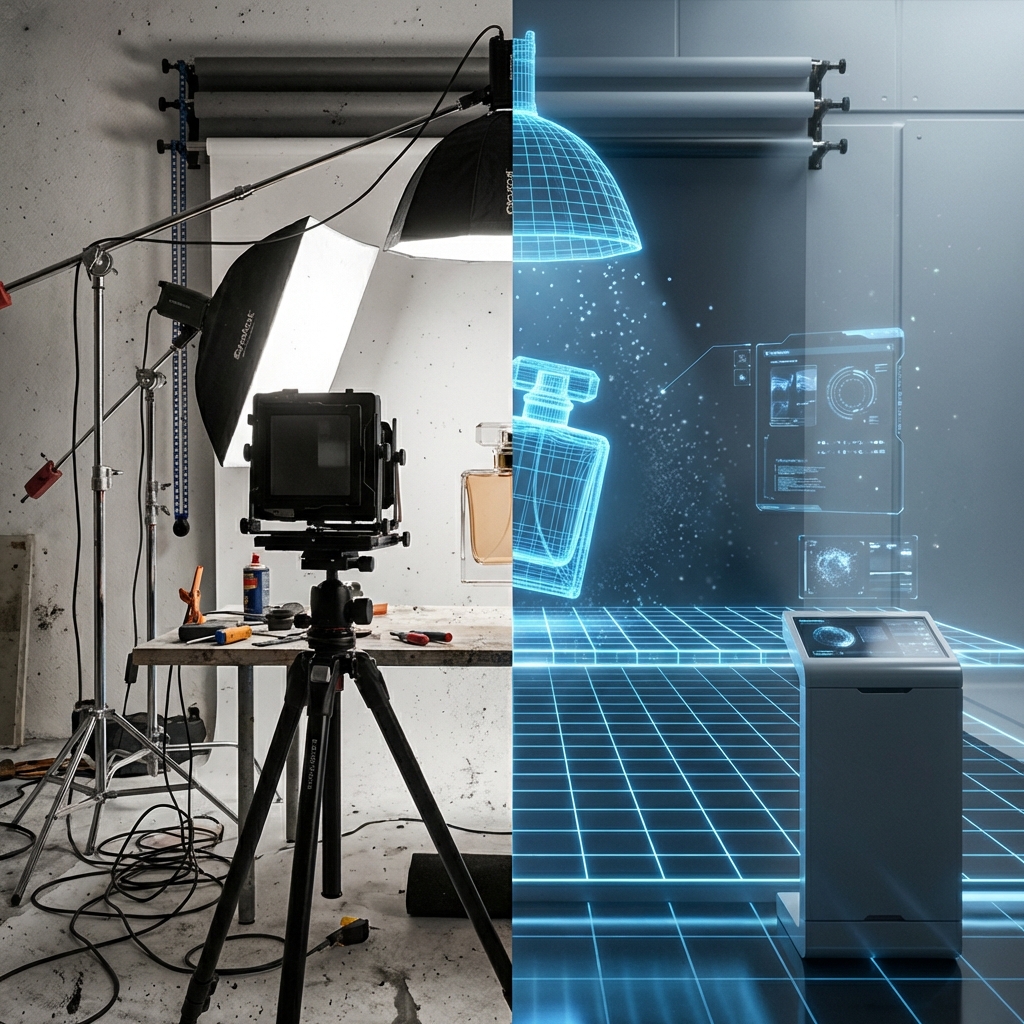
The Shift to CGI: Why Cameras are Gathering Dust
Next time you flip through an IKEA catalog or browse the Apple website, take a closer look. You might be shocked to learn that nearly 75% of those "photos" are actually 3D computer-generated images (CGI). The world's biggest and most successful brands are quietly moving away from traditional photography studios and towards 3D visualization labs. But why make the switch?
The answer lies in a combination of cost, flexibility, and impossible possibilities.
Major Advantages of 3D Product Visualization
1. Infinite Flexibility & Variation
Imagine you sell a sofa that comes in 50 different fabrics and 5 leg colors. To photograph this portfolio, you would need to manufacture 250 physical sofas, ship them to a studio, and shoot each one. The logistics and costs are nightmarish.
With 3D rendering, you model the sofa once. Then, you can digitally "swap" the fabric texture and leg color with a single click. You can generate thousands of photorealistic product variants without ever manufacturing a single unit. This is perfect for "Just-in-Time" manufacturing or testing market interest before production.
2. The "Impossible" Shot
How do you photograph the inner workings of a running car engine? Or a mattress cross-section showing the foam layers floating in a cloud? Or a skyscraper that hasn't been built yet?
3D visualization allows you to defy the laws of physics. You can create exploded views, cutaways, and abstract environments that highlight your product's technology in ways a camera simply cannot. You have total control over gravity, lighting, and reality.
3. Perfect Consistency
In photography, recreating the exact same lighting and camera angle six months later for a new product launch is incredibly difficult. Shadows change, bulbs fade, photographers change styles. In a 3D environment, your "virtual studio" is saved forever. You can open the file 5 years later, drop in a new product, and render an image that matches your previous campaign pixel-perfectly. This builds strong brand visual identity.
4. Cost-Effectiveness at Scale
While the initial cost of creating a high-quality 3D model might be higher than a single photoshoot, the ROI kicks in with scale. Once you have the 3D asset, generating new angles, close-ups, or 360-degree spins costs a fraction of a re-shoot. There are no studio rental fees, no shipping costs, no travel expenses, and no insurance for physical prototypes.
When is Traditional Photography Still Better?
CGI isn't the winner every time. Traditional photography still holds the edge for:
- Lifestyle shots with people: While 3D humans are getting better, they often still fall into the "Uncanny Valley." Real human emotion and interaction are best captured on camera.
- Food: Making food look appetizing in 3D is an incredibly difficult artistic challenge; real food photography usually feels more organic and tasty.
- One-off products: If you only have one unique antique item to sell, taking a photo is faster and cheaper than modeling it from scratch.
Conclusion
For the vast majority of consumer packaged goods, electronics, furniture, and industrial products, 3D visualization is rapidly becoming the superior choice. It offers a level of control, scalability, and perfection that physics simply cannot match.