
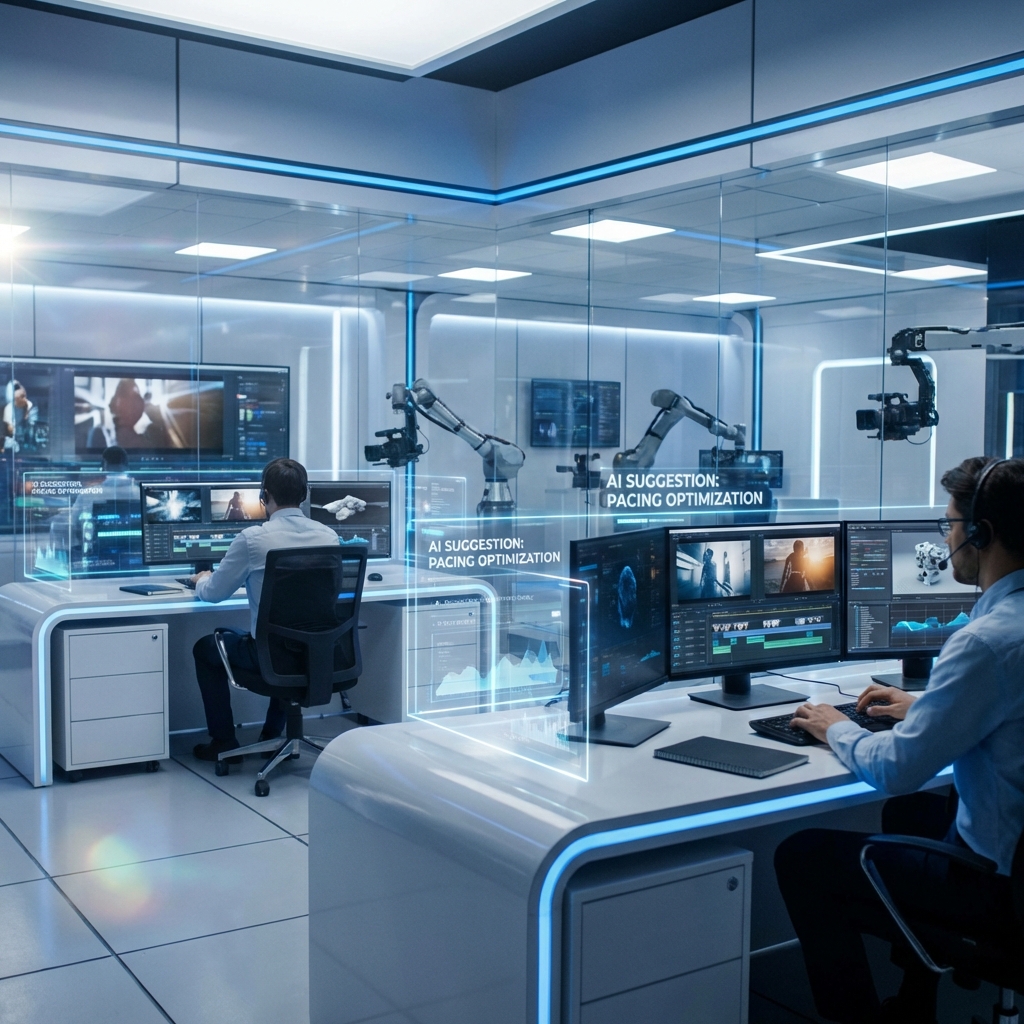
From Boring Boardrooms to Cinematic Experiences
For decades, "corporate video" has been synonymous with dry, slow-paced interviews and uninspired B-roll. It was functional, but rarely engaging. Today, Artificial Intelligence is flipping that narrative. AI video editing tools are not replacing human creativity; they are supercharging it, allowing L&D (Learning and Development) teams, HR departments, and marketing agencies to produce broadcast-quality video content at unprecedented speeds and lower costs.
How AI is Revolutionizing Post-Production
The traditional video editing workflow is tedious—logging footage, syncing audio, cutting dead air. AI automates the grunt work, freeing up human editors to focus on storytelling and flow.
1. Smart Cuts & Automated Scene Detection
AI algorithms can now scan hours of CEO interviews or training footage and automatically detect silences, "ums," "ahs," and awkward pauses. With one click, tools can create a rough "jump cut" edit that removes all fluff. This reduces the initial editing phase from hours to minutes.
2. Automated Captioning & Neural Translation
In a globalized corporate world, language barriers are a major challenge. AI-driven transcription is now near-perfect. But it goes further: AI dubbing tools can translate a speaker's voice into Spanish, French, or Mandarin while preserving their original tone and even lip-syncing the video to match the new language. This is a massive game-changer for international internal communications and training compliance.
3. Text-Based Editing
Tools like Descript or Adobe Premiere's text-based editing allow you to edit video by editing the transcript. If you delete a sentence in the text document, the video automatically cuts that section out properly. This allows non-video professionals (like marketing managers) to create rough cuts or review content incredibly fast.
4. Audio Enhancement
Bad audio ruins good video. Corporate videos are often shot in echoey conference rooms or noisy offices. AI audio enhancers (like Adobe Podcast) can take tinny, noisy smartphone audio and isolate the voice, adding bass and clarity so it sounds like it was recorded in a professional soundproof studio.
The Human Touch Remains Essential
With all this automation, is the video editor obsolete? Absolutely not. AI is a tool, not a director. It can make cuts, but it doesn't understand pacing, emotion, or brand voice.
A human editor is still needed to:
- Weave a coherent narrative that resonates emotionally with employees or clients.
- Make creative decisions about music choice and timing.
- Design complex motion graphics that align with brand guidelines.
- Add the "soul" that a machine simply cannot replicate.
Conclusion
The future of corporate video production is a hybrid workflow: AI handles the technical, repetitive tasks for speed and efficiency, while human creatives focus on the strategy and storytelling. This combination allows companies to produce more video content, better video content, and faster video content than ever before.