
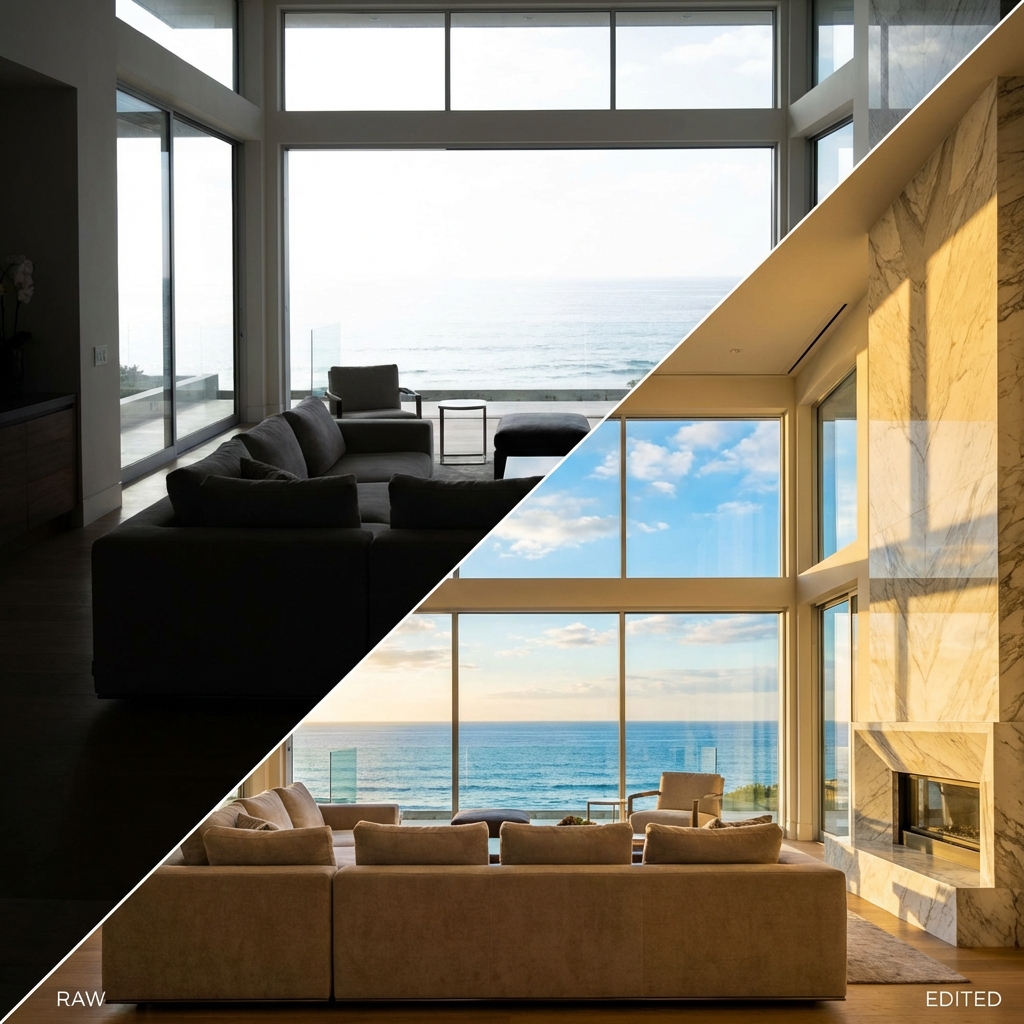
The First Showing Happens Online: Why Visuals Make or Break Deals
In the modern real estate market, the "first showing" doesn't happen when a buyer steps out of their car at the property; it happens days or weeks earlier, on a smartphone screen. Over 90% of home buyers start their search online on platforms like Zillow or Realtor.com. In the highly competitive luxury market, where emotional connection is key, your listing photos need to be nothing short of breathtaking.
Standard single-exposure photography simply cannot capture the dynamic range of the human eye, especially in high-contrast scenes common in luxury homes—like a dimly lit living room with a bright view of the ocean outside. This is where professional Real Estate Photo Editing becomes critical.
What is HDR Blending?
High Dynamic Range (HDR) blending is the secret weapon of top-tier real estate photographers. It involves taking multiple shots of the exact same scene at different exposure levels:
- Underexposed: Captures details in the bright windows and outdoor views.
- Normal Exposure: Captures the general room ambiance.
- Overexposed: Captures details in the dark shadows and corners.
These 3 to 5 images are then digitally blended in post-production to create a single, perfectly balanced photo. The result? A viewer can see the rich texture of the leather sofa inside and the vibrant blue of the ocean and sky outside, just as the human eye would perceive it in person.
Essential Editing Techniques for Luxury Listings
1. Sky Replacement
You can't control the weather on the shoot day, but you can control it in post-production. A grey, gloomy sky can make even a multi-million dollar mansion feel depressing and cold. Sky replacement services swap out dull, overcast clouds for crisp blue skies or dramatic, warm sunsets. This instantly boosts "curb appeal" and significantly alters the emotional response of the buyer.
2. Vertical Straightening & Lens Correction
Wide-angle lenses are essential for showing the full scope of small rooms, but they often introduce optical distortion. This makes vertical lines (walls, door frames, cabinets) look like they are bowing or falling inward.
Professional editing corrects this "keystoning," ensuring all vertical lines are perfectly parallel—90 degrees to the floor. This provides a stable, architectural look that signals high-end quality and professionalism.
3. Day to Dusk Conversions (Virtual Twilight)
Twilight photos—homes photographed at sunset with interior lights glowing—are known to attract significantly more clicks. However, scheduling a photographer for that precise 15-minute window is difficult and expensive. "Day to Dusk" editing takes a standard daytime exterior shot and digitally transforms it into a stunning sunset image, turning on interior lights, adding a glow to pool water, and painting the sky with purples and oranges.
4. Object Removal and Decluttering
Ideally, homes are staged perfectly. In reality, a stray garden hose, a parked car in the driveway, or a reflection of the photographer in a mirror can ruin a shot. Digital decluttering removes these distractions seamlessly, allowing the buyer's focus to remain entirely on the property's features.
The ROI of Professional Editing
Data from real estate analyties firms consistently shows that listings with professional, high-quality photos sell 32% faster and often for higher prices closer to the asking rate. For luxury real estate agents, the cost of professional photo editing is a tiny fraction of their commission, yet it is arguably the single most important marketing factor in getting a qualified buyer through the door.
In a market where inventory is visible to the world 24/7, you cannot afford to have average photos. Elevate your listings with HDR editing and watch your engagement rates soar.